
PK Data Solutions Portfolio
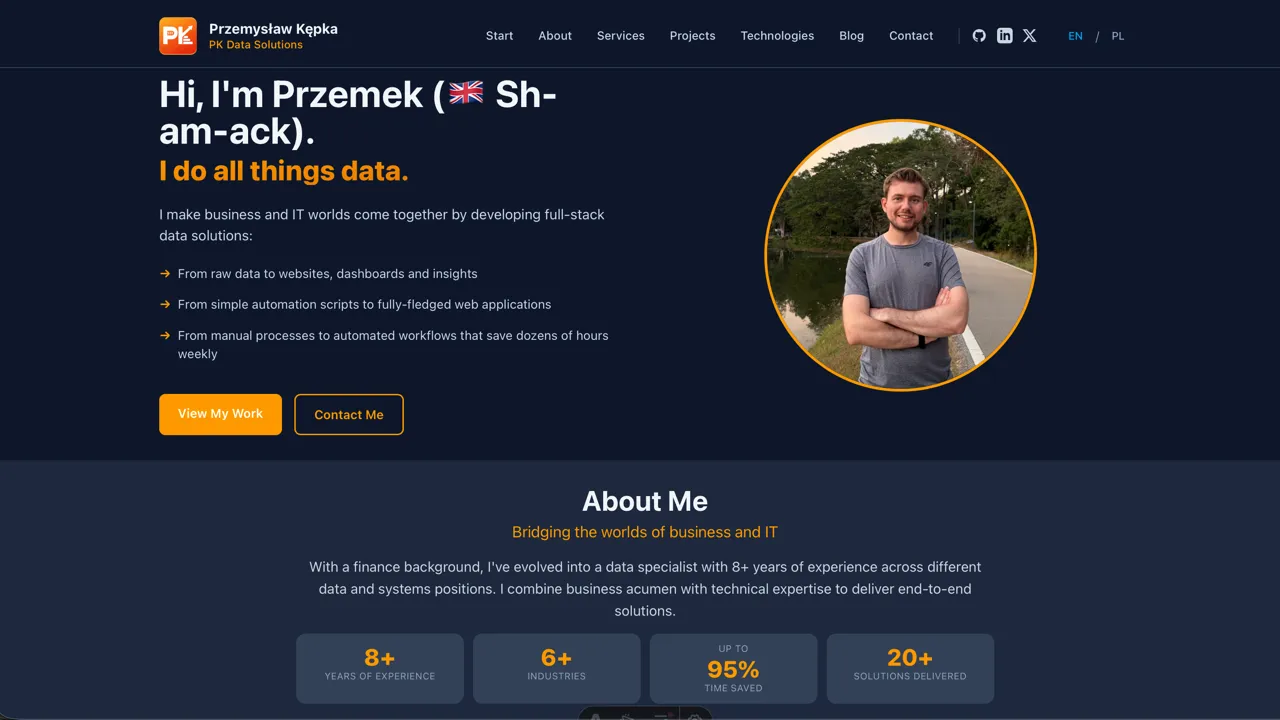
Nowoczesna i responsywna strona typu portfolio, oparta na technologiach Astro, Vue.js i Tailwind CSS. Pozwala na obsługę dużej ilości treści (content-driven architecture), dostępnej jednocześnie w dwóch językach.
Użyte Technologie
Szczegółowe treści projektów dostępne są obecnie tylko w języku angielskim.
Context
Building solutions is one thing. Building an online presence that showcases what you can do? That’s another challenge entirely. So I decided I need my own website.
As a “data guy,” building visually polished websites isn’t my main cup of tea. But I do claim full-stack capabilities - so why not build a robust site for myself?
Solution
The website you’re looking at right now is the result.
Building process
Planning & Research
Before writing a single line of code:
- Research - I checked dozens of websites from other professionals (potential competitors, even) to decide on content and functionality
- Vision document - I described how I envision the website: design, layout, and the logic behind each section
- PRD generation - Based on my vision, Claude Code prepared a detailed PRD document
Note: no tech stack decisions yet at this point - that came later.
Development
With the PRD ready, the coding could begin:
- Setup - I set up the base Astro project myself
- Code generation - Claude Code generated the initial code based on the PRD
- Iteration - From there, it was an iterative process of improving and implementing features
The Reality of Content-Heavy Sites
So AI just built you a website in one day? I wish. It wasn’t that simple:
- Writing - Even with samples of my writing, AI-generated content rarely matched my voice. Detailed project descriptions meant a lot of writing on my end
- Visuals - Instead of AI-generated images, I used real screenshots or created mockups where actual photos weren’t available
- Effort - Even leveraging LLMs heavily, creating a website I’m genuinely pleased with took real work (and being pleased with it is a requirement)
Why Astro?
The AI had a lot of context before starting - not just my vision for the website, but also my broader plans and the technologies I know and want to learn.
I had heard about Astro before, and it looked like a perfect fit.
Its “content-first” philosophy aligns with the volume of content I have here, growing over time with new projects and blog posts. Since the site is mostly static (project descriptions, blog posts, about page), I don’t need a heavy JavaScript framework. Astro generates static HTML, which means fast loading and good SEO.
But I still wanted some interactivity - the project filters, for example. That’s where Astro’s “islands architecture” comes in: I can use Vue components where I need them, and they only load JavaScript when necessary. This also aligns well with my upcoming projects, where Vue will be used extensively.
The Stack
- Astro for the core framework and static generation
- Vue for interactive components (project filtering, etc.)
- Tailwind CSS for styling
- Markdown for all content - each project is a
.mdfile with frontmatter for metadata
Content Architecture
Each project lives as a Markdown file:
src/content/projects/
├── cm-rentals.md
├── entity-report.md
├── temperature-monitoring.md
└── ...
This makes it easy to add or edit projects - just update the Markdown file, no database needed. The frontmatter handles all the metadata (technologies, categories, project type, etc.), and Astro’s content collections give me type-safety.
Real-world Application
Building this site was essentially a frontend engineering project:
- Component architecture and reusability
- Responsive design (mobile-first)
- Content management without a traditional CMS
- Deployment and hosting considerations
Professional Takeaways
- Astro is great for content-heavy sites - the static generation is fast, the content collections are elegant, and you can add interactivity where needed
- Building your own portfolio forces clarity - you have to actually articulate what you do and what value you bring
- Full-stack means full-stack - being able to go from Python data work to modern frontend development is genuinely useful